The Journal · October 20, 2026
Khimar or hijab: which to choose and how to wear it
What a khimar is, how it differs from a hijab you wrap, which layers and fabrics suit prayer, Umrah and occasions, and how to put one on well.
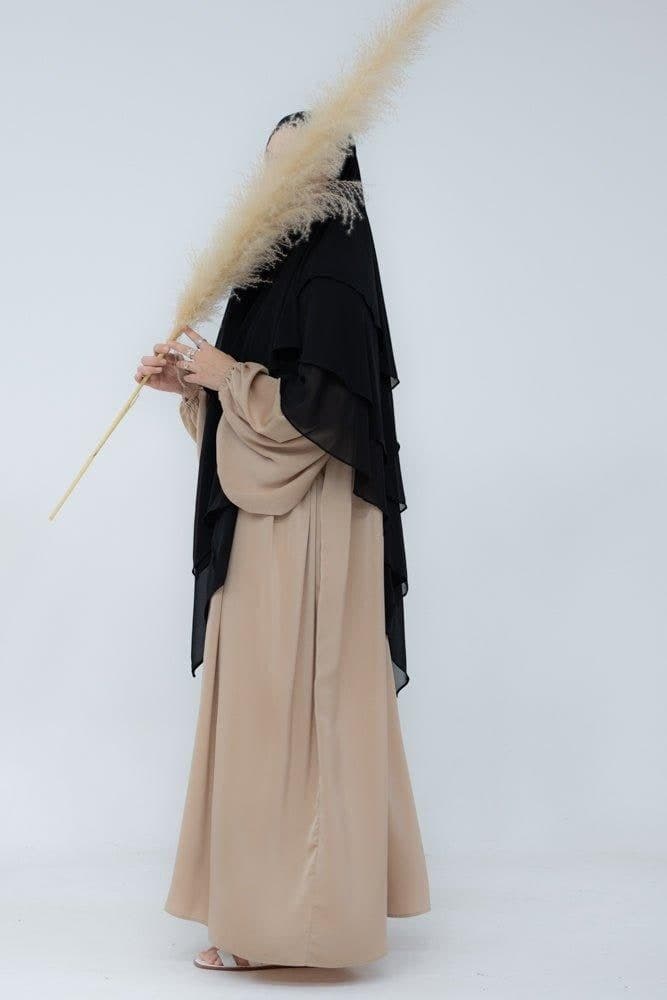
A hijab is a scarf you wrap and pin. A khimar goes on over the head in one piece and falls over the shoulders and chest, so there is nothing to wrap, pin or adjust. Both cover; they suit different days. This guide explains the difference, how to choose a khimar by its layers and fabric, and how to wear one.
Khimar or hijab: the difference
A hijab from our collection is a generous rectangle of chiffon or a similar fabric that you drape and secure yourself, so its shape is yours to decide each morning. A khimar is sewn into its shape: a rounded cape for the head with an opening for the face. It covers the hair, neck, shoulders and chest in one movement and stays where it is all day. The hijab is the more versatile piece; the khimar is the faster and the fuller.
When a khimar is the better choice
For prayer at home or at the mosque, when you need to be covered in a moment. For Umrah and Hajj, when long days leave no time to re-wrap. For a dress or abaya with a plain neckline that wants a soft frame around the face. And for anyone who finds pins uncomfortable or slippery fabric tiring: a khimar needs neither.
One, two or three layers
The number of layers decides how a khimar looks and feels. Each product page says what a khimar is made of and how many layers it has.
- One layer is the lightest. Our Ayman one-layer khimars have a ruffled edge, an integrated niqab and a headband that ties at the back, in a lightweight matte fabric that does not slip; they come in black, white, pink, khaki, coffee, dark blue, light blue, fog blue, taro, light green and dark grey, at $66.
- Two layers give more coverage and a fuller line. The extra-long two-layer chiffon khimars, at $69, move beautifully and are made for occasions; the two-layer khimars in crease-resistant fabric are the ones to pack for travel.
- Three layers of chiffon move the most. The Munawara three-layer khimar, at $93, converts to a niqab and comes in black, navy and pink.
Chiffon or matte fabric
Chiffon is light, breathes and floats, which is why the two- and three-layer khimars are made in it: the layers give the coverage, the chiffon keeps it weightless. The one-layer khimars use a lightweight matte fabric with a little grip, so a single layer stays in place on its own. For a day in the heat, chiffon; for travel and for prayer at home, matte or crease-resistant.
How to wear a khimar
Put a thin undercap on first if your hair is fine or slippery; with a matte fabric it is not essential. Hold the khimar by its front edge, lower it over your head and let it fall over the shoulders. Settle the face opening so that it sits evenly, then smooth the front panel over the chest. With a ruffle-edge khimar, tie the headband at the back under the fall of the fabric. That is all: no pins, and nothing to redo during the day.
Wearing it as a niqab
Many of our khimars convert: the two- and three-layer styles named "niqab feature" and the one-layer ruffle-edge khimars with their integrated niqab. Lift the lower front panel over the nose and fasten it as the pictures on the product page show. Check the description of the khimar you choose.
What to wear with a khimar
A khimar sits over an abaya or a long modest dress with a plain neckline; the dress or abaya in a khimar's pictures is not included unless its page says so. For prayer, a khimar over a prayer gown covers from head to hem. Our Prayer & Umrah collection gathers all of these together, and the Umrah packing guide says what to bring.
Colours
Black, white and navy are the classic choices for prayer and travel. Pink, light blue, light green and coffee suit a khimar worn as part of an outfit. A white khimar pairs with white and ivory dresses; see our white modest dresses.
Caring for a khimar
Hand wash cold with a mild detergent, or dry clean, and do not tumble dry. Chiffon is best steamed or ironed on the lowest setting; a crease-resistant khimar can be folded straight into a suitcase. The care for each fabric is on its product page.
Common questions
Is a khimar one size?
Yes, every khimar in our collection comes in one size; where a page has measurements, they are under Size & fit.
Which khimar is best for Umrah?
A two-layer khimar in crease-resistant fabric: it comes out of a suitcase ready to wear and covers fully for the mosque.
How much does a khimar cost?
From $62 to $93: the one-layer ruffle-edge khimars are $66, the two-layer chiffon styles $69 and the three-layer Munawara $93.
Can I return a khimar?
Yes, within 14 days of delivery, unworn, unwashed and with its tags; the details are on the returns page.